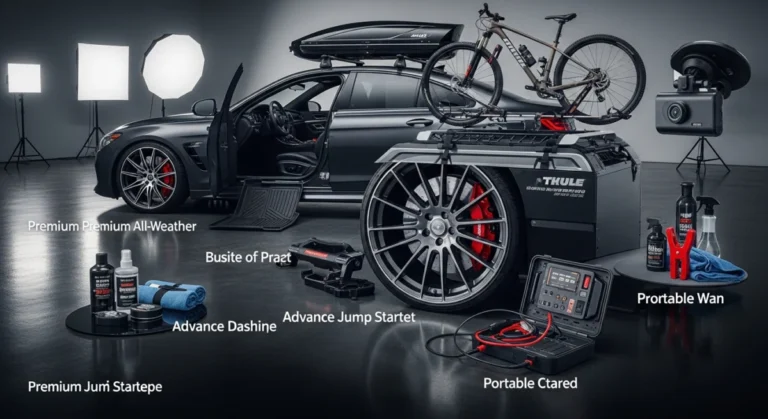
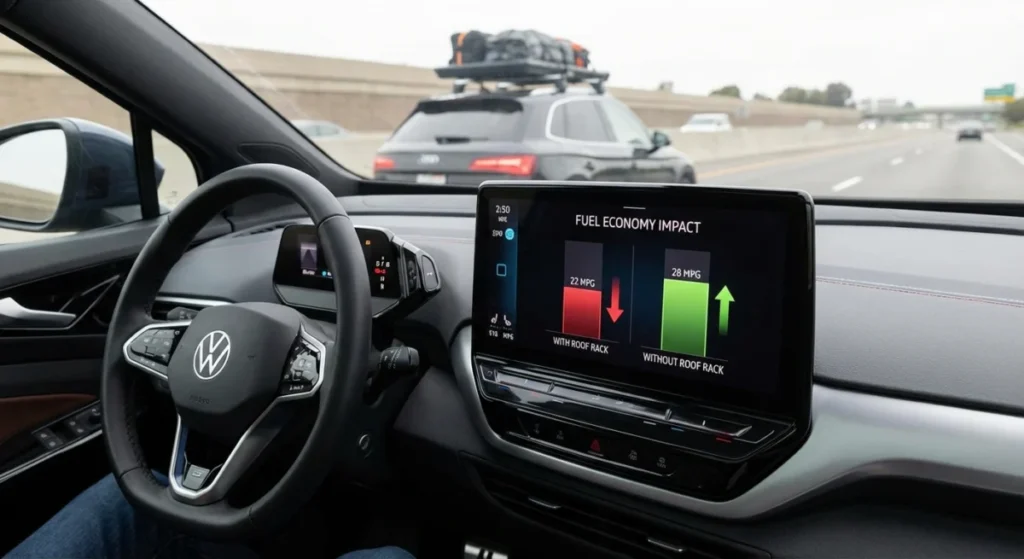
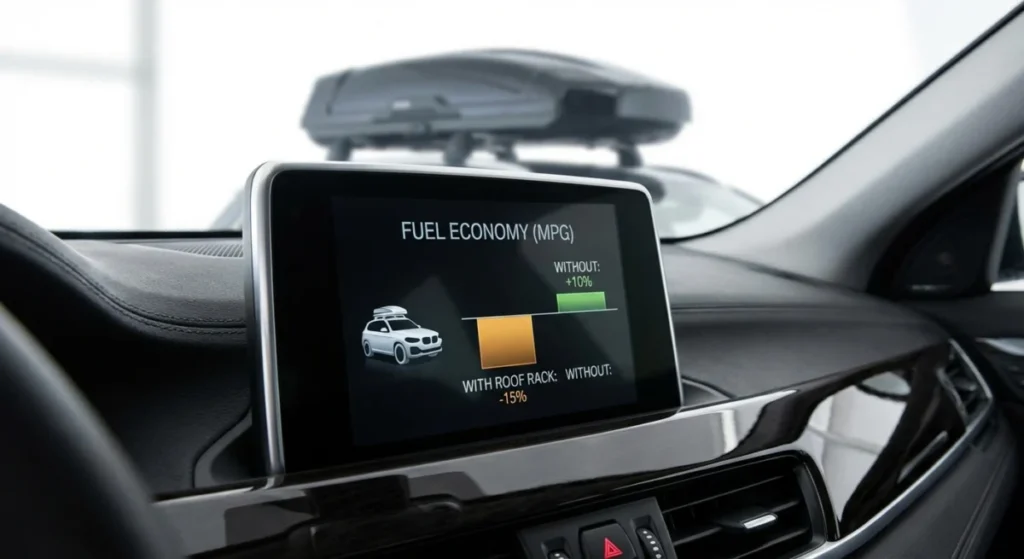
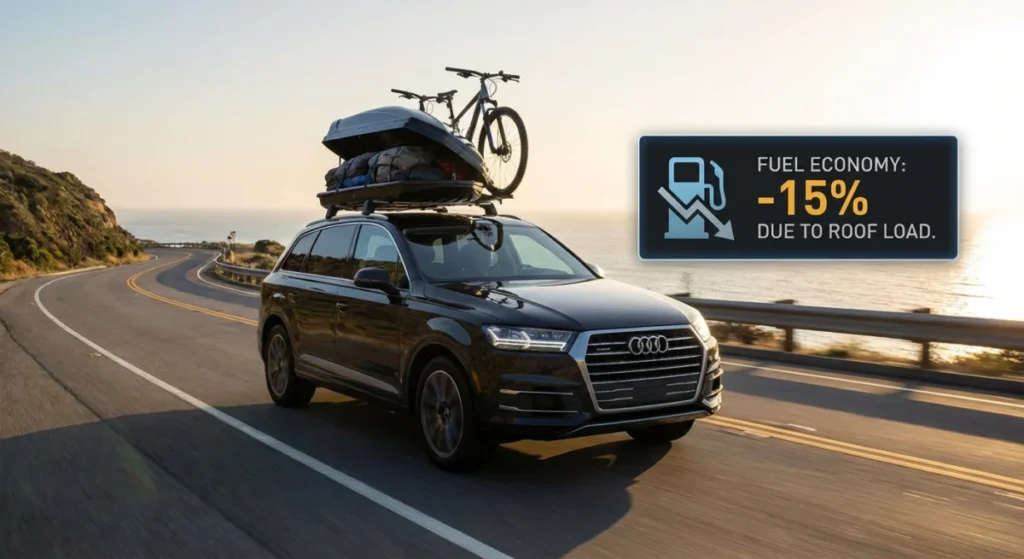
Roof racks are undeniably versatile accessories, opening up a world of possibilities for transporting luggage, bikes, kayaks, and other oversized gear. However, that added convenience comes at a cost – literally. Multiple studies show that roof racks can significantly impact your vehicle’s fuel economy, reducing MPG by anywhere from 1% to 25%, depending on the vehicle, rack type, load, and driving conditions. This article delves into the intricate relationship between roof racks and fuel consumption, offering a comprehensive guide to understanding, mitigating, and ultimately accepting this trade-off.
Understanding the Impact: Roof Racks and Aerodynamics
A roof rack’s influence on fuel economy stems primarily from its effect on aerodynamic drag.
What is Aerodynamic Drag?
Aerodynamic drag, also known as air resistance, is the force that opposes a vehicle’s motion through the air. As a car moves, it has to push air out of the way. A streamlined vehicle slices through the air efficiently, encountering minimal resistance. Less streamlined vehicles, on the other hand, create turbulence and require more energy to overcome the drag, thus burning more fuel.
How Roof Racks Increase Drag
Roof racks disrupt the smooth airflow over a vehicle. Even when empty, they introduce obstructions that create turbulence and increase the vehicle’s drag coefficient (Cd). This is the quantifiable measure of how aerodynamic an object is. A higher Cd means more drag, leading to higher fuel consumption.
When a load is secured to the roof rack, the impact on drag becomes even more pronounced. Luggage carriers, bikes, and kayaks drastically alter the vehicle’s profile, creating significant wind resistance. The larger and more irregularly shaped the load, the greater the increase in drag and the more substantial the fuel economy penalty.
The Physics Behind the Loss
The power required to overcome aerodynamic drag increases exponentially with speed. This means that the effect of a roof rack on fuel economy is more significant at highway speeds than in city driving. A minor increase in drag at 30 mph might have a negligible effect, but at 70 mph, the added drag requires a considerable increase in engine power, resulting in significantly worse MPG.
Mitigating the Impact: Strategies for Fuel Efficiency
While completely eliminating the fuel economy penalty of a roof rack is often impossible, several strategies can help minimize its impact.
Choosing the Right Roof Rack
Opt for aerodynamic roof racks. These are designed with streamlined profiles to minimize wind resistance. Look for racks with rounded or teardrop-shaped crossbars. These designs slice through the air more efficiently than traditional square or round bars.
Consider removable roof racks. If you only need a roof rack occasionally, choose a system that is easy to install and remove. This allows you to keep the rack off your vehicle when it’s not in use, preventing unnecessary drag and fuel consumption.
Select a low-profile roof rack. The lower the rack sits to the vehicle’s roof, the less it disrupts the airflow.
Optimizing Your Load
Pack efficiently. Reduce the size and weight of your load as much as possible. The heavier the load, the more fuel your vehicle will consume, regardless of the roof rack’s aerodynamics.
Streamline your load. Use cargo carriers with aerodynamic shapes to enclose your gear. This significantly reduces wind resistance compared to simply strapping items directly to the roof rack. Ensure all items are secured tightly and covered if possible.
Distribute the load evenly. Proper load distribution is essential for both fuel economy and vehicle handling. Distribute the weight evenly across the roof rack to minimize imbalance and maintain stability.
Driving Habits
Reduce speed. As mentioned before, aerodynamic drag increases exponentially with speed. Reducing your speed by even 5-10 mph can significantly improve fuel economy, especially when carrying a load on your roof rack.
Avoid unnecessary trips. Plan your trips carefully and combine errands to minimize the number of times you need to drive with a roof rack.
Vehicle Maintenance
Ensure proper tire inflation. Underinflated tires increase rolling resistance, further reducing fuel economy. Regularly check and maintain the recommended tire pressure for your vehicle.
Maintain your engine. A well-maintained engine runs more efficiently and consumes less fuel. Follow the manufacturer’s recommended maintenance schedule for oil changes, tune-ups, and other services.
Choosing the Right Rack: Key Buying Factors
Selecting the appropriate roof rack involves careful consideration of several factors:
Vehicle Compatibility
Ensure the roof rack is specifically designed to fit your vehicle’s make and model. Using an incompatible rack can damage your vehicle’s roof or compromise the rack’s stability.
Load Capacity
Determine the maximum weight the roof rack can safely carry and ensure it meets your needs. Overloading a roof rack can be dangerous and damage the rack or your vehicle.
Ease of Installation
Consider how easy the roof rack is to install and remove. Choose a system with a straightforward installation process if you plan to frequently remove the rack when it’s not in use.
Durability and Weather Resistance
Opt for a roof rack made from high-quality materials that can withstand the elements. Look for racks with corrosion-resistant coatings to protect against rust and damage from weather exposure.
Security Features
Select a roof rack with secure locking mechanisms to prevent theft of the rack itself or the items you are carrying.
Maintenance and Care
Proper maintenance extends the lifespan of your roof rack and ensures its optimal performance.
Regular Cleaning
Clean your roof rack regularly to remove dirt, debris, and road salt. Use a mild soap and water solution and a soft brush to avoid scratching the finish.
Inspection
Periodically inspect your roof rack for signs of wear and tear, such as cracks, rust, or loose bolts. Address any issues promptly to prevent further damage.
Tightening Bolts
Check and tighten all bolts and fasteners regularly to ensure the roof rack remains securely attached to your vehicle.
Lubrication
Lubricate moving parts, such as locking mechanisms, to keep them functioning smoothly.
Essential FAQ
**Q: How much does a roof rack *really* affect fuel economy? A: The impact varies greatly, but expect anywhere from a 1% to 25% reduction in MPG. The higher end of that range is usually with a large cargo carrier and at highway speeds.
Q: Are aerodynamic roof racks worth the extra cost? A: Yes, especially if you frequently use your roof rack. The reduced drag can result in noticeable fuel savings over time.
Q: Does the type of vehicle influence the impact of a roof rack on fuel economy? A: Absolutely. Vehicles with inherently better aerodynamics, like sedans, tend to be more negatively affected than boxier vehicles like SUVs, where the rack adds proportionally less drag.
Q: Is it better to keep the roof rack on all the time or remove it when not in use? A: Removing it when not in use is almost always the better option for maximizing fuel economy. The benefits of having it available for spontaneous use are weighed against the fuel cost.
Q: What’s the best way to secure items to a roof rack to minimize fuel consumption?** A: The best approach is using an enclosed, aerodynamic cargo carrier. If that’s not feasible, secure items as tightly as possible, minimizing exposed surfaces facing the wind.
Conclusion
The impact of a roof rack on fuel economy is an unavoidable consequence of increased aerodynamic drag. While it requires a conscious decision to accept reduced fuel efficiency for the added convenience of hauling extra gear, understanding the underlying principles and implementing the mitigation strategies outlined above can help minimize the penalty. By carefully choosing the right roof rack, optimizing your load, adopting fuel-efficient driving habits, and diligently maintaining your vehicle, you can enjoy the benefits of a roof rack without significantly impacting your wallet or the environment. Ultimately, the decision boils down to weighing the convenience of a roof rack against the cost of decreased fuel efficiency – a trade-off only you can determine.