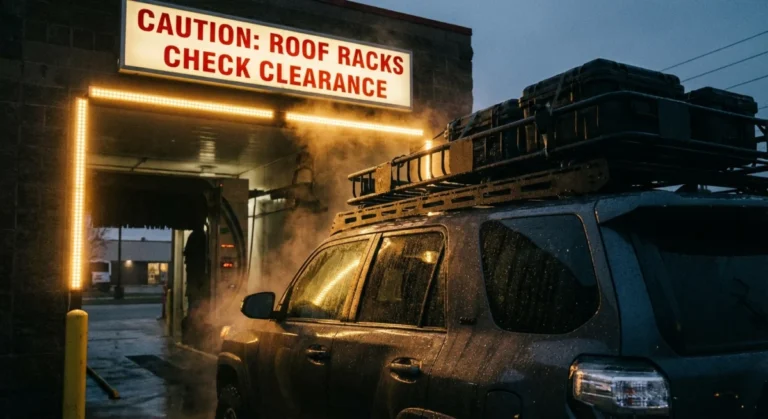
Navigating the concrete jungle with extra gear on your roof? Let’s talk about roof racks and the sometimes-nerve-wracking world of parking garage clearance. A recent study showed that over 60% of drivers with roof racks have experienced anxiety or near-misses in parking garages or low-clearance areas. The problem is simple: adding a roof rack significantly increases your vehicle’s overall height, making it crucial to understand and manage clearance to avoid costly damage. This guide will equip you with the knowledge and best practices to confidently maneuver with your roof rack, protecting both your vehicle and the structures you encounter.
Understanding Roof Racks and Clearance
What is a Roof Rack and How Does it Work?
A roof rack is a framework fitted on the roof of a vehicle, primarily used to carry bulky items such as luggage, bicycles, kayaks, skis, or cargo boxes. It essentially extends your vehicle’s storage capacity without taking up valuable interior space. They work by attaching to the vehicle’s roof using various methods, including:
- Factory-installed tracks or fixed points: These are pre-existing mounting locations on your vehicle’s roof.
- Door frame clamps: These wrap around the vehicle’s door frame for a secure fit.
- Rain gutter mounts: Used on older vehicles with rain gutters, these clamp onto the gutters.
The rack itself typically consists of two crossbars running horizontally across the roof, supported by towers or feet that attach to the vehicle. The height of the rack, added to the vehicle’s original height, determines the overall height and the clearance required.
Benefits and Key Features of Roof Racks
Increased Cargo Capacity: The most obvious benefit. Carry more gear without sacrificing passenger space. Versatility: Roof racks accommodate a wide range of attachments for different activities (bike carriers, ski racks, kayak carriers, cargo boxes). Improved Organization: Keeping bulky items on the roof frees up interior space, making for a more comfortable and organized journey. Protection: A well-chosen roof rack can protect your vehicle’s roof from scratches and dents when loading and unloading cargo.
Key Features:
- Load Capacity: Refers to the maximum weight the rack can safely carry. Always check the manufacturer’s specifications and never exceed the limit.
- Aerodynamics: Some roof racks are designed with aerodynamics in mind to reduce wind noise and improve fuel efficiency.
- Durability: Look for racks made from high-quality materials like aluminum or steel that can withstand harsh weather conditions and heavy loads.
- Security: Features like locking mechanisms can deter theft of the rack itself and any attached equipment.
- Compatibility: Ensuring the rack is compatible with your specific vehicle model is critical for a secure and safe installation.
Installation Tips for Roof Racks
Read the Instructions Carefully: This is the most crucial step. Each rack and vehicle have unique installation requirements. Gather the Necessary Tools: Have all the required tools readily available before you begin. This may include wrenches, screwdrivers, torque wrenches, and measuring tapes. Protect Your Vehicle’s Roof: Use masking tape or a protective film to prevent scratches during installation. Tighten Bolts to the Correct Torque: Using a torque wrench ensures that the bolts are tightened to the manufacturer’s specified torque, preventing over-tightening or loosening. Double-Check Everything: After installation, double-check that all components are securely attached and that the rack is properly aligned. Seek Professional Help if Needed: If you’re uncomfortable with the installation process, don’t hesitate to seek assistance from a professional installer.
Maintenance and Care of Roof Racks
Regular maintenance ensures the longevity and safe operation of your roof rack.
- Regular Cleaning: Wash the rack regularly with soap and water to remove dirt, salt, and debris.
- Inspect for Damage: Periodically inspect the rack for signs of damage, such as cracks, rust, or loose bolts.
- Tighten Bolts: Regularly check and tighten all bolts and fasteners. Vibration can cause them to loosen over time.
- Lubricate Moving Parts: Lubricate any moving parts, such as locks and hinges, with a suitable lubricant.
- Remove When Not in Use: If you don’t use your roof rack frequently, consider removing it to reduce wind resistance and improve fuel efficiency. Store it in a dry place to prevent corrosion.
- UV Protection: If your rack includes plastic parts, consider applying a UV protectant to prevent fading and cracking from sun exposure.
Top Buying Factors for Roof Racks
- Vehicle Compatibility: This is paramount. Use the manufacturer’s fit guide to ensure the rack is compatible with your specific make, model, and year.
- Load Capacity: Determine the maximum weight you’ll need to carry and choose a rack with an appropriate load capacity.
- Type of Gear: Consider the type of gear you’ll be carrying (bikes, kayaks, skis, cargo boxes) and choose a rack that’s compatible with the necessary attachments.
- Durability and Materials: Opt for a rack made from high-quality materials that can withstand harsh weather conditions and heavy use.
- Ease of Installation: Choose a rack that’s easy to install and remove, especially if you plan to use it infrequently.
- Aerodynamics: If fuel efficiency is a concern, look for a rack with an aerodynamic design.
- Price: Roof racks vary widely in price. Set a budget and compare features and quality within that range.
- Reviews: Read online reviews from other users to get an idea of the rack’s performance and reliability.
- Brand Reputation: Stick to reputable brands known for quality and customer service.
Essential FAQs About Roof Racks and Clearance
Q1: How do I determine my vehicle’s new height with a roof rack installed? A: The best way is to physically measure it. Park on a level surface and use a measuring tape or laser measuring tool. Measure from the ground to the highest point of the rack. This is your vehicle’s overall height with the rack. It’s better to overestimate slightly than to underestimate.
Q2: What’s the standard clearance height in most parking garages? A: While it varies, the standard clearance height in many parking garages is around 7 feet (84 inches or 2.13 meters). However, always look for posted clearance signs before entering, as some older or smaller garages may have lower clearances.
Q3: What are some strategies for avoiding clearance issues in parking garages? A: * Be observant: Pay close attention to posted clearance signs.
- Walk the garage first: If unsure, walk the garage and look for the lowest clearance points (often near ramps or pipes).
- Consider removing the rack: If possible and practical, remove the rack when entering low-clearance areas.
- Take the scenic route: Opt for street parking or outdoor lots whenever possible.
- Use technology: Some GPS apps and navigation systems allow you to input your vehicle’s height and will warn you of potential low-clearance areas.
Q4: What happens if I accidentally hit the top of a parking garage with my roof rack? A: Stop immediately and assess the damage. Check for damage to your vehicle’s roof, the roof rack, and the garage structure. Exchange information with the property owner or manager. Document the damage with photos and file a claim with your insurance company if necessary. Even minor scrapes can indicate underlying structural damage to the rack or your vehicle.
Q5: Are there any roof rack accessories that can help with clearance awareness? A: While there aren’t specific accessories *designed* purely for clearance, a rearview camera with height guidelines can be helpful. Also, paying close attention when reversing or maneuvering is important. Consider brightly colored tape on the highest point of your rack as a visual reminder.
Conclusion
Navigating parking garages and low-clearance areas with a roof rack requires awareness, preparation, and careful driving. By understanding the principles of roof rack installation, maintenance, and clearance, you can confidently transport your gear without risking damage to your vehicle or the surrounding environment. Always prioritize safety, double-check clearances, and err on the side of caution. Happy travels!