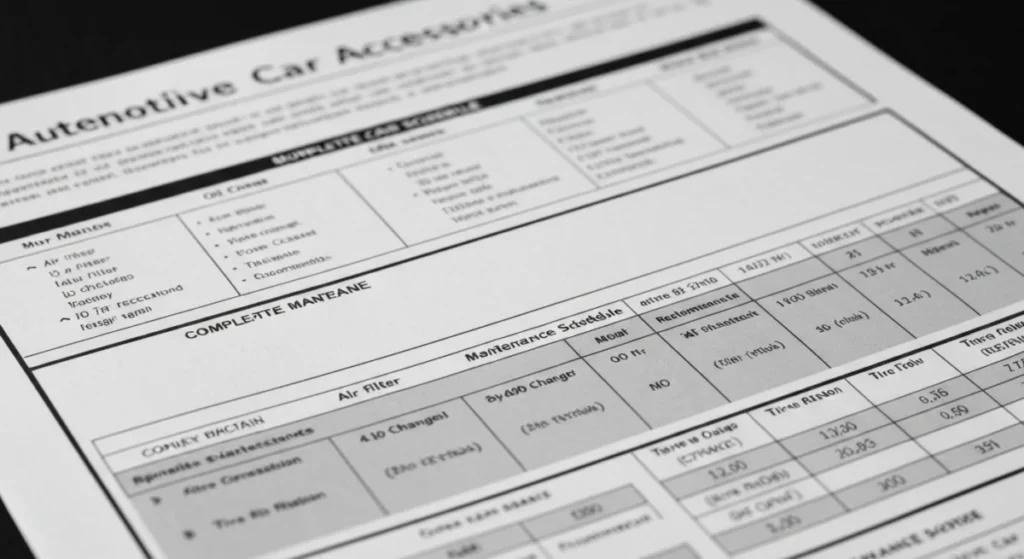
Car Accessories Maintenance Schedule: A Comprehensive Guide for Longevity and Performance
The modern vehicle is rarely just a means of transportation; it’s an extension of our personalities, a mobile office, and a hub for entertainment. We invest in car accessories to enhance comfort, safety, and performance, but neglecting their maintenance can lead to premature failure, diminished functionality, and even safety hazards. Just like your car’s engine needs regular servicing, so too do its accessories.
Consider this: studies show that neglecting regular maintenance on aftermarket accessories can reduce their lifespan by as much as 50%. This guide provides a comprehensive schedule and expert advice on how to maintain your car accessories, ensuring they continue to perform optimally for years to come. We’ll explore various popular accessories, their maintenance needs, and crucial buying factors to help you make informed decisions.
Maintaining Your Car’s Vital Accessories: A Comprehensive Guide
1. Car Batteries & Battery Accessories
What is it / How it works
A car battery is the heart of your vehicle’s electrical system, providing the necessary power to start the engine and run electrical accessories. Battery accessories include terminals, clamps, tie-downs, and battery maintainers. They work in conjunction to ensure a secure connection and optimal battery health.
Benefits and key features
- Reliable starting power.
- Extended battery life.
- Improved electrical system performance.
Installation tips (if applicable)
- Disconnect the negative terminal first, then the positive.
- Clean terminals with a wire brush before reconnecting.
- Ensure proper polarity when reconnecting (positive to positive, negative to negative).
- Secure the battery with a proper tie-down.
Maintenance and care
- Inspect terminals for corrosion monthly. Clean with a baking soda and water solution.
- Check battery voltage regularly with a multimeter (should be around 12.6V when fully charged).
- Use a battery maintainer/trickle charger during periods of inactivity.
- Have the battery tested annually at an auto parts store.
- Consider a battery blanket in extreme cold climates.
Top buying factors
- Cold Cranking Amps (CCA): Choose a battery with sufficient CCA for your vehicle’s needs.
- Reserve Capacity (RC): Higher RC indicates longer power supply during alternator failure.
- Battery Type: Consider AGM (Absorbent Glass Mat) batteries for their durability and spill-proof design, especially for vehicles with start-stop systems.
- Warranty: Opt for a battery with a long warranty.
- Size and Fit: Ensure the battery fits your vehicle’s battery tray.
2. Car Audio Systems (Head Units, Speakers, Amplifiers)
What is it / How it works
Car audio systems transform electrical signals into audible sound. Head units control the source (radio, CD, Bluetooth), speakers reproduce the sound, and amplifiers boost the signal to drive the speakers effectively.
Benefits and key features
- Enhanced listening experience.
- Bluetooth connectivity for hands-free calling and music streaming.
- Navigation capabilities (on some head units).
- Improved sound quality and clarity.
Installation tips (if applicable)
- Disconnect the car battery before starting any installation.
- Use proper wiring harnesses to avoid damaging the factory wiring.
- Mount amplifiers securely to prevent vibration and overheating.
- Run speaker wires neatly and avoid pinching them.
Maintenance and care
- Clean the head unit screen regularly with a soft, lint-free cloth.
- Check speaker connections periodically for looseness or corrosion.
- Avoid exposing amplifiers to extreme temperatures or moisture.
- Adjust volume levels appropriately to prevent speaker damage.
- Consider professional tuning for optimal sound quality.
Top buying factors
- Power Output (Watts): Ensure the amplifier’s power output matches the speakers’ RMS (Root Mean Square) power rating.
- Speaker Sensitivity: Higher sensitivity speakers require less power to produce a given volume.
- Head Unit Features: Consider features like Apple CarPlay, Android Auto, Bluetooth, and navigation.
- Impedance (Ohms): Match the amplifier’s impedance to the speakers’ impedance.
- Speaker Type: Choose component speakers for superior sound quality over coaxial speakers.
3. Dash Cams & Safety Accessories
What is it / How it works
Dash cams record video footage while you drive, providing evidence in case of an accident. Safety accessories include blind spot monitors, parking sensors, and tire pressure monitoring systems (TPMS). They enhance safety and awareness while driving.
Benefits and key features
- Evidence in case of accidents.
- Theft deterrence.
- Improved driving safety.
- Prevention of parking mishaps.
Installation tips (if applicable)
- Mount dash cams securely to the windshield for optimal visibility.
- Hardwire dash cams for continuous recording and parking mode functionality.
- Calibrate blind spot monitors and parking sensors according to the manufacturer’s instructions.
Maintenance and care
- Regularly format the dash cam’s memory card to prevent data corruption.
- Check the lens for dirt and debris and clean it with a soft cloth.
- Ensure parking sensors are free from obstructions.
- Monitor TPMS readings and maintain proper tire pressure.
- Update dashcam firmware regularly.
Top buying factors
- Video Resolution: Choose a dash cam with at least 1080p resolution for clear footage.
- Field of View: A wider field of view captures more of the surroundings.
- Features: Consider features like loop recording, G-sensor, and parking mode.
- Reliability: Read reviews and choose a reputable brand.
- Sensor Accuracy: Ensure accuracy in TPMS and other sensor-based safety accessories.
4. Car Lighting (Headlights, Taillights, Auxiliary Lights)
What is it / How it works
Car lighting provides visibility for both the driver and other motorists. Headlights illuminate the road ahead, taillights signal braking and turning, and auxiliary lights provide additional illumination for off-road driving or poor weather conditions.
Benefits and key features
- Improved visibility in low-light conditions.
- Enhanced safety for the driver and other motorists.
- Customization options for aesthetics.
- Increased illumination for off-road adventures.

Installation tips (if applicable)
- Disconnect the car battery before replacing any bulbs.
- Handle halogen bulbs with gloves to avoid contaminating them with skin oils.
- Ensure proper alignment of headlights to avoid blinding oncoming traffic.
- Use proper wiring harnesses for auxiliary lights.
Maintenance and care
- Inspect headlights and taillights regularly for damage or dimming.
- Clean lenses with a plastic cleaner to remove dirt and debris.
- Replace bulbs as needed to maintain optimal brightness.
- Check wiring connections for corrosion.
- Ensure auxiliary lights are properly aimed to avoid blinding other drivers.
Top buying factors
- Brightness (Lumens): Choose bulbs with sufficient lumens for optimal visibility.
- Bulb Type: Consider LED bulbs for their long lifespan and energy efficiency.
- Color Temperature (Kelvin): Choose a color temperature that provides good visibility without being too harsh.
- Beam Pattern: Ensure the beam pattern is appropriate for the intended use.
- Legality: Check local laws regarding auxiliary lighting.
5. Car Covers and Protection Accessories
What is it / How it works
Car covers and accessories like seat covers, floor mats, and sunshades protect your vehicle’s exterior and interior from damage caused by weather, UV rays, dirt, and wear and tear.
Benefits and key features
- Protection from the elements (sun, rain, snow, hail).
- Prevention of fading and cracking of the paint and interior.
- Preservation of the vehicle’s value.
- Maintenance of cleanliness inside the car.
Installation tips (if applicable)
- Ensure a snug but not overly tight fit for car covers.
- Use secure straps or tie-downs to prevent the cover from blowing away.
- Properly install seat covers according to the manufacturer’s instructions.
- Use floor mats that are designed to fit your vehicle’s floorboards.
Maintenance and care
- Wash car covers regularly with a mild detergent and water.
- Avoid storing a wet or dirty car cover, allow it to dry completely.
- Clean seat covers and floor mats regularly with a vacuum cleaner or upholstery cleaner.
- Use a UV protectant on interior surfaces to prevent fading.
- Store sunshades properly when not in use.
Top buying factors
- Material: Choose a breathable, waterproof car cover material.
- Fit: Ensure the car cover fits your vehicle snugly.
- Durability: Look for seat covers and floor mats made from durable materials.
- UV Protection: Choose sunshades with high UV protection.
- Ease of Cleaning: Opt for accessories that are easy to clean and maintain.
Essential FAQ Section
Q1: How often should I check my car battery terminals for corrosion?
A: Ideally, you should check your car battery terminals at least once a month for any signs of corrosion. Early detection prevents significant issues.
Q2: Can I wash my car cover in a washing machine?
A: It depends on the material. Always check the manufacturer’s instructions. Some car covers are machine washable with a mild detergent on a gentle cycle, while others require hand washing.
Q3: How do I know if my car speakers are blown?
A: Common signs of blown speakers include distorted sound, rattling noises, and a lack of bass. If you notice any of these issues, it’s time to consider replacing your speakers.
Q4: Are LED headlights legal in all states?
A: While LED headlights are generally legal, specific regulations regarding brightness, color, and aiming may vary by state. Check your local laws before installing aftermarket LED headlights.
Q5: How often should I format my dash cam’s memory card?
A: To prevent data corruption and ensure optimal performance, it’s recommended to format your dash cam’s memory card at least once a month. Some cameras may automatically prompt you to do so.
Conclusion
By following the maintenance schedule outlined in this guide, you can significantly extend the lifespan and improve the performance of your car accessories. Regular maintenance not only saves you money in the long run but also ensures your safety and enjoyment on the road. Remember that prevention is always better than cure, so take the time to care for your vehicle’s accessories, and they’ll reward you with years of reliable service.