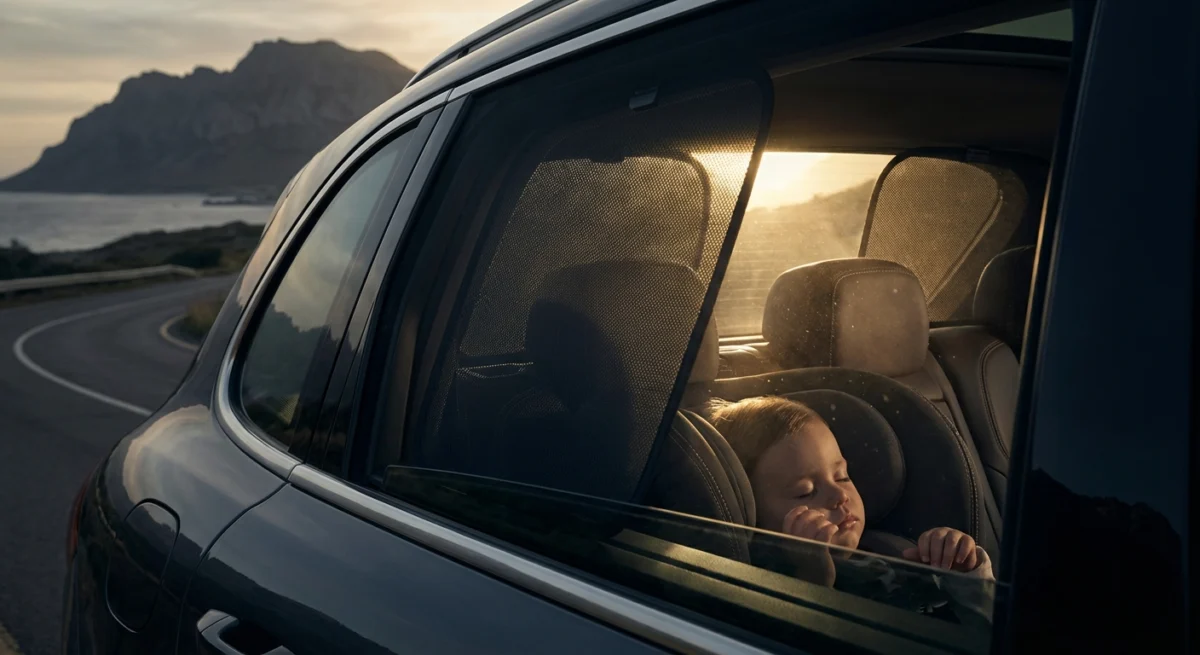
The Ultimate Automotive Expert’s Guide to Baby Sun Shades
Picture this: You’re cruising down the highway on a cloudless July afternoon. Your A/C is blasting at max, but in the rearview mirror, you see your infant squinting, sweating, and visibly uncomfortable. You reach back to check their car seat buckle—it’s hot to the touch.
Here is the reality check: Standard automotive glass blocks most UVB rays (the ones that cause sunburn), but it allows a significant amount of UVA rays (the ones responsible for deep skin damage and heat) to penetrate right through to your backseat passengers. According to the Skin Cancer Foundation, UVA rays can penetrate glass, meaning your child is being exposed to radiation even with the windows up.
A high-quality baby sun shade isn’t just an accessory; it is a critical component of your vehicle’s climate control and safety ecosystem. This guide will walk you through everything you need to know to choose, install, and maintain the perfect shield for your little one.
—
What Is a Baby Sun Shade and How Does It Work?
At its core, a baby sun shade is a supplemental barrier applied to your vehicle’s side or rear windows. Unlike permanent aftermarket window tinting, which requires professional application and adherence to strict state laws, sun shades are removable, adjustable, and specifically designed to filter light spectrums.
They work on two principles: 1. Physical Filtration: By placing a mesh or film layer between the sun and the cabin, the shade physically blocks a percentage of visible light (reducing glare) and invisible radiation (UV rays). 2. Thermal Reflection: Many high-end shades utilize a dual-layer design—a dark inward-facing side to absorb scattered light and a reflective outward-facing side to bounce heat away from the glass surface.
—
Benefits and Key Features
Why should you invest in a dedicated automotive shade rather than just throwing a towel over the window?
1. Superior UV Protection
The best shades on the market offer UPF 30+ to 50+, blocking over 98% of harmful UV radiation. This is vital for infants, whose skin possesses less melanin and is much thinner than adult skin.
2. Cabin Climate Control
While your car’s A/C cools the air, it cannot stop the “greenhouse effect” caused by direct solar gain on black car seat fabric. A sun shade significantly reduces the surface temperature of car seats, buckles, and your baby’s skin.
3. Glare Reduction
Sudden flashes of sunlight can be startling or painful for a baby trying to sleep. A shade creates a consistent, dim environment conducive to napping, which means a quieter, less distracted drive for you.
—
Types of Baby Sun Shades: The Pros and Cons
Not all shades are created equal. As an automotive expert, I classify them into four distinct categories based on their attachment mechanism and coverage.
Static Cling Shades

These are the modern “gold standard” for safety. They consist of a flexible, wire-framed mesh or a PVC film that adheres to the glass using static electricity.
- Pros: Zero hard parts (no projectile risk in a crash), easy to reposition, sleek “factory” look.
- Cons: Can be tricky to install without bubbles; cannot roll the window down while in use.
The “Window Sock” (Mesh Pullover)
Imagine a breathable mesh sleeve that slides over the entire top frame of your car door.
- Pros: Covers 100% of the window (no light gaps); allows you to roll the window down for fresh air while maintaining shade; acts as a bug screen.
- Cons: Aesthetically polarizing (looks like a black sock on the outside of your car); can flap noisily at highway speeds; can obstruct driver blind-spot visibility more than other types.
Roller / Retractable Shades
These function like a household blind, usually attaching via suction cups or clips to the top of the glass.
- Pros: Adjustable height (roll it up when it gets dark).
- Cons: Safety Risk: In a collision, the heavy roller mechanism and hard plastic clips can become dangerous projectiles. Automotive safety advocates generally recommend avoiding hard accessories near an infant’s head zone. Suction cups also tend to fail in extreme heat.
Magnetic / Custom Fit Shades
These contain small magnets sewn into the hem of the shade, which click directly onto the metal window frame of your car door.

- Pros: extremely secure; tailored fit for specific vehicle models; no residue on the glass.
- Cons: More expensive; only works on vehicles with metal door frames (many modern luxury cars use aluminum or plastic trim).
—
Expert Installation Tips
Improper installation is the 1 reason parents complain about shades falling off. Follow this protocol for a “permanent-style” hold.
For Static Cling Shades:
1. Decontaminate the Glass: Use an automotive glass cleaner and a microfiber towel. Any grease, finger oils, or dust will kill the static bond. 2. Temperature Matters: Install the shade when the glass is cool to the touch. Hot glass causes the air between the film and window to expand, creating bubbles. 3. The Squeegee Technique: Once placed, use a credit card (wrapped in a soft cloth to prevent scratching) to push air bubbles from the center out toward the edges.
For Suction Cup Models:
1. Moisture is Key: Lightly moisten the inside of the suction cup with a damp cloth (water only, no saliva!) before pressing it onto the glass. 2. Re-Press Periodically: Suction cups lose grip as temperature fluctuates. Get in the habit of pressing them firmly every time you buckle your child in.
—
Maintenance and Care

To ensure longevity and visibility, treat your shades like you treat your sunglasses.
- Cleaning: Never use ammonia-based cleaners (like Windex) on plastic film shades, as it can yellow the material. Use warm water and a drop of mild dish soap. Wipe gently with a microfiber cloth.
- Storage: If you remove static cling shades, do not fold them, as this creates permanent creases. Roll them or store them flat.
- Mesh Care: “Window socks” collect road dust and pollen. Remove them monthly and hand wash in a sink with cool water, then air dry. Do not put them in a dryer.
—
Top Buying Factors
When shopping, ignore the cute cartoon characters and focus on these technical specifications:
1. Visibility (VLT)
Visible Light Transmission (VLT) is crucial. You want a shade that blocks UV rays but still allows you to check your blind spot. Avoid solid blackouts unless they are for a rear-facing infant where the driver does not need to look through that specific patch of glass. Mesh shades usually offer the best balance of protection and visibility.
2. Fit and Coverage
Measure your window before buying. “Universal” fits are rarely universal.
- SUVs/Minivans: Look for “XL” or rectangular shapes (approx. 20″x12″).
- Sedans: Look for tapered or contoured shapes to match the slope of the C-pillar.

3. Safety Certification
Prioritize soft-frame designs. In the event of a side-impact collision, you do not want a heavy metal roller bar dislodging. Look for “shatter-proof” and “projectile-free” descriptions.
—
Essential FAQ
1. Are baby sun shades legal to use on all windows?
Generally, no. Most jurisdictions strictly prohibit obstructing the front driver and passenger side windows. Sun shades are typically legal only on the rear side windows. However, laws vary by state and country—always check your local Department of Transportation regulations regarding “obstruction of view.”
2. Can I roll my window down with a sun shade installed?
Only if you are using a Mesh Pullover / Window Sock style shade. Static cling and suction cup shades must be removed before lowering the window, or they may get jammed inside your door panel, potentially damaging the window motor.
3. Do sun shades block 100% of UV rays?
No shade blocks 100%, but high-quality options block 97% to 99% of UVA/UVB rays. Look for a product with a verified UPF (Ultraviolet Protection Factor) of 30 or higher. If a manufacturer doesn’t list the UPF rating, assume it is just a light filter, not a UV shield.

4. Why do my suction cups keep falling off?
This is usually due to dirty glass or thermal expansion. Clean the glass with alcohol to remove residue. If the cups are deformed, soak them in warm water for 5 minutes to reshape them before re-installing.
5. Will these shades damage my factory window tint?
Static cling and suction cup shades are generally safe for factory tint. However, be careful with adhesive-backed films (stickers), as removing them can sometimes peel or damage aftermarket tint films.
—
Conclusion
Ignoring the sun’s impact on your vehicle’s interior is a rookie mistake, especially when you have precious cargo on board. A high-quality baby sun shade is a low-cost investment that pays dividends in safety, comfort, and peace of mind.
For the modern parent, I highly recommend static cling shades for their blend of safety (no hard parts) and effectiveness, or mesh window socks if you prioritize airflow. Whichever you choose, ensure it fits your vehicle properly and never compromises your visibility as a driver. Stay cool and drive safe.