The sound is unmistakable to any car enthusiast: the sickening ping-ping-ping of gravel ricocheting off your fender, followed by the dull thud of heavy mud caking onto your rocker panels. It is the sound of your vehicle’s clear coat slowly surrendering to the elements. Whether you are piloting a lowered Subaru WRX through a rally stage, navigating a lifted Jeep Wrangler over rocky terrain, or simply driving a family sedan through a construction zone, the enemies of your paint job are everywhere.
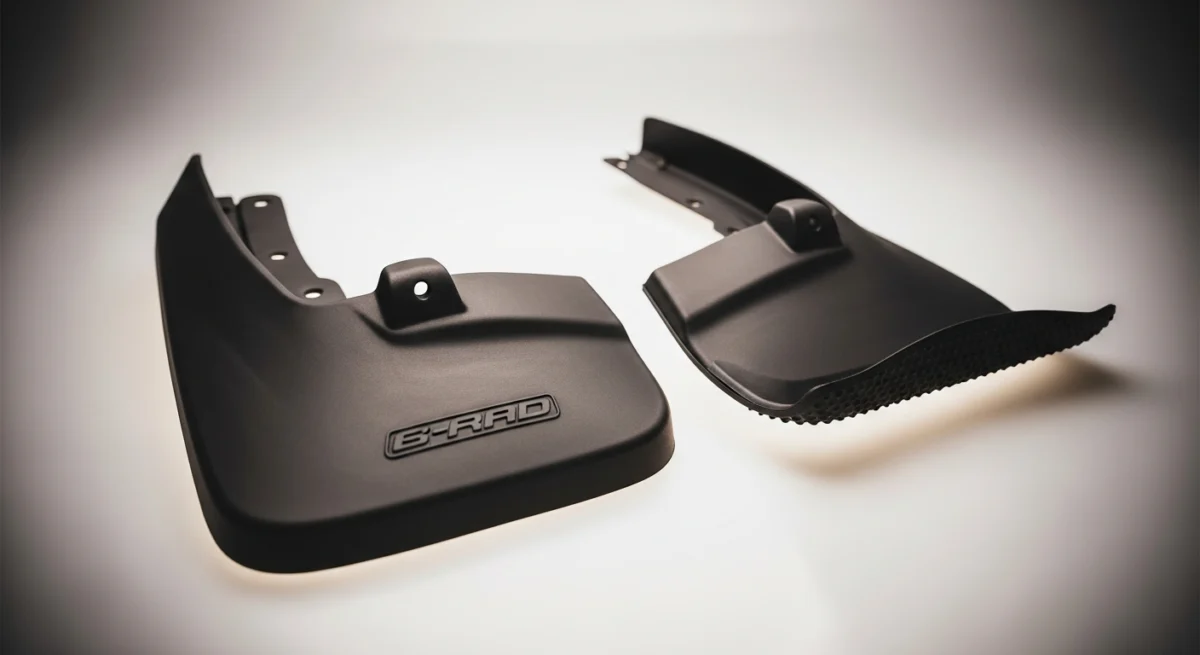
While vehicle manufacturers often include small splash guards, they are rarely sufficient for serious protection. Enter universal mud flaps. Unlike vehicle-specific molded guards that prioritize subtle integration over coverage, universal mud flaps are the heavy artillery of exterior protection. They offer a customizable, heavy-duty solution designed to stop road debris, salt, and tar in their tracks before they can effectively sandblast your vehicle’s sides.
However, the term “universal” can be misleading. It does not mean “magic fit.” It means “adaptable.” As an automotive expert, I am going to walk you through everything you need to know about these essential accessories—from understanding material science to executing a perfect, custom installation that looks factory-grade.
What Are Universal Mud Flaps and How Do They Work?
At their core, universal mud flaps are flat, flexible, or semi-rigid sheets of material designed to be mounted behind the wheels of a vehicle. Unlike molded splash guards, which are contoured to fit the specific body lines of a single make and model, universal flaps are generally rectangular “blanks.” They are the raw material of protection, intended to be trimmed, drilled, and positioned according to the specific needs of the driver and the geometry of the vehicle.
The Physics of Debris Deflection
To understand how they work, you have to look at the physics of a rotating tire. As your tire grips the road, the tread blocks pick up water, rocks, glass, and road salts. Centrifugal force ejects these projectiles at high velocity. Without a barrier, this debris follows a trajectory that usually impacts the fender well, the rocker panels, the lower doors, and the rear bumper.
Universal mud flaps interrupt this trajectory. By extending lower and wider than standard splash guards, they create a “catch zone” that absorbs the kinetic energy of the debris. The material then directs the spray downward back onto the road surface rather than outward toward your paint or the windshield of the car behind you.
Universal vs. Custom Fit
The primary distinction lies in customization. Custom-fit flaps are “bolt-on” ready but often lack the aggressive width or length needed for vehicles with offset wheels or lift kits. Universal flaps give the installer total control over:
- Poke: How far the flap sticks out past the fender.
- Drop: How close the flap hangs to the ground.
- Angle: The ability to correct for suspension geometry.
The Critical Benefits of Upgrading to Universal Flaps
Why would you choose a flat sheet of material over a contoured factory part? The answer lies in performance and versatility.
superior Paint and Body Protection
The most obvious benefit is the preservation of your vehicle’s exterior. Road rash—the accumulation of thousands of micro-chips along the bottom of the car—is a leading cause of rust. By installing wider universal flaps, you shield the vulnerable metal of the rocker panels and the pinch welds from salt and moisture. This is particularly vital for those living in the “Rust Belt” or coastal regions.
Accommodation for Modified Vehicles
If you have modified your vehicle’s suspension or wheels, factory splash guards are rendered useless.
- Lifted Trucks: When you lift a truck and add larger tires, the tire tread becomes exposed. A universal flap is often the only way to get enough length to legally and effectively cover the tire.
- Lowered Cars: Factory plastic guards are rigid. If a lowered car scrapes a speed bump, rigid guards can crack or rip the bumper cover off. Universal flaps made of polyurethane or flexible rubber will simply bend and snap back into place.
Legal Compliance
Many states and countries have strict laws regarding tire coverage. If your tires protrude past the fender flares (common in off-road builds), you are a magnet for traffic tickets. Universal mud flaps allow you to extend the coverage width to satisfy Department of Transportation (DOT) requirements without buying expensive aftermarket wide-body flares.
Aesthetic Customization
There is an undeniable style factor. The “Rally” look, popularized by WRC racing, relies heavily on prominent, functional mud flaps. Universal options come in various colors (red, black, blue) and styles, allowing enthusiasts to dial in a specific aggressive aesthetic that stock guards cannot provide.
Key Features and Buying Factors
Not all slabs of rubber are created equal. When shopping for universal mud flaps, the material composition is the single most important variable.
Material Composition: The Big Three
1. Polyurethane (Poly): This is the gold standard for high-performance and rally applications. Polyurethane is incredibly durable, resistant to extreme temperature swings (it won’t crack in sub-zero weather), and chemically resistant to road salts, oils, and grease. It is flexible enough to survive a scrape but rigid enough not to “sail” (flap around) at highway speeds. 2. Polyethylene / ABS Plastic: These are budget-friendly, rigid options. They are durable against impact but lack flexibility. If you hit a curb with a rigid plastic flap, it may crack or transfer the impact energy to the mounting point, potentially damaging your fender. These are best for daily drivers that do not see off-road use. 3. Heavy-Duty Rubber: Often reinforced with cord or fabric (like a tire), these are the heavyweights used on trucks and 4x4s. They are thick and heavy, designed to stop large rocks. They hang straight due to their weight but can be prone to “sailing” if they aren’t thick enough.
Hardware and Mounting Brackets
Since these are universal, they rarely come with vehicle-specific brackets. However, high-quality kits will include:
- Stainless steel hardware: Essential to prevent the screws from rusting to your fender.
- Support brackets: Metal bars that prevent the flap from curling over time.
- Washers and spacers: Used to level the flap against curved fender liners.
Size and Dimensions
“Universal” usually comes in sizes like Sedan, SUV, and Truck/Dually. Always measure your wheel well before buying.
- Width: You want the flap to be at least as wide as your tire tread.
- Length: Measure from the mounting point to your desired ground clearance. A good rule of thumb is 5 to 7 inches of ground clearance for daily driving to avoid constant scraping.
Expert Installation Guide: The “Measure Twice” Approach
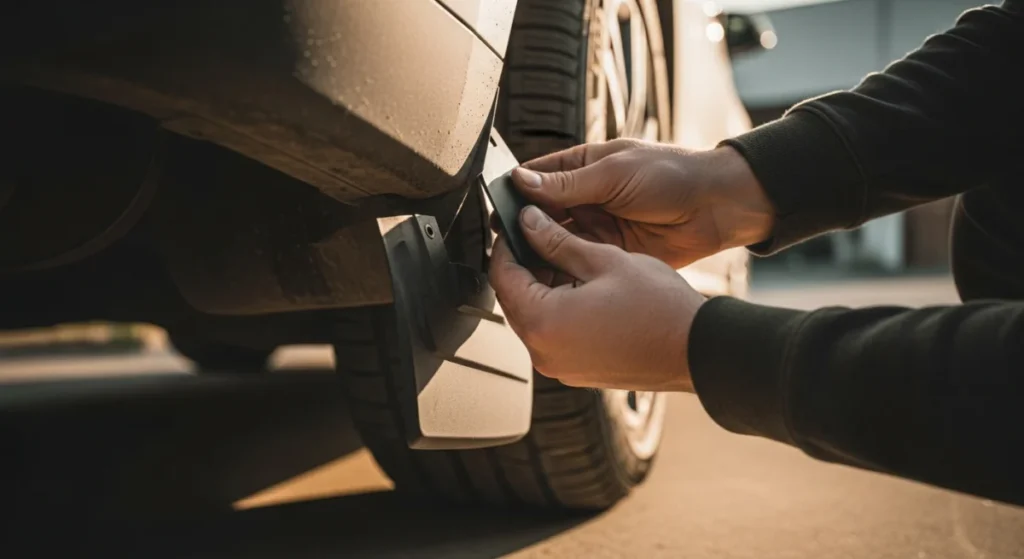
Installing universal mud flaps is more fabrication than installation. You are creating a custom part for your car. Here is the professional workflow to ensure they look factory-installed rather than slapped on.
Phase 1: Preparation and Template Creation
Do not just hold the flap up and drill. You will get it crooked.
- Clean the Area: Thoroughly wash the wheel wells. You do not want to trap mud between the flap and the paint.
- Create a Template: Use a piece of stiff cardboard. Cut it to the size of your mud flap.
- Mock-Up: Tape the cardboard to the wheel well. This allows you to step back and visualize the “poke” and height. Adjust the cardboard until you are happy with the coverage and aesthetics. Mark your mounting holes on the cardboard based on existing fender liner screws or safe drilling spots.
Phase 2: Transfer and Trim
- Transfer: Lay the cardboard template over your universal mud flap. Transfer the hole locations and any trim lines using a paint marker or chalk.
- Trimming: Most wheel wells have contours or suspension arms that might interfere with a flat sheet. Use heavy-duty shears or a sharp utility knife (for rubber/poly) or a Dremel/jigsaw (for rigid plastic) to trim the inner edge of the flap to match the vehicle’s body lines.
Phase 3: Mounting and Leveling
- The Hardware: Use stainless steel screws and washers. If you are drilling into metal, treat the hole with a dab of touch-up paint or rust inhibitor first.
- The “Floppy” Problem: If the flap is only held on by inner screws, the outer edge will flap in the wind. You may need to install a small “L” bracket connecting the outer edge of the flap to the inner lip of the fender.
- Leveling: Mount the flap loosely. Use a bubble level to ensure the bottom of the flap is parallel to the ground. Stand back 20 feet and check visually. Once satisfied, tighten the hardware.
Pro Tip: If your car has carpeted wheel well liners, standard screws won’t hold. You will need to use “speed clips” or clamp-style mounting solutions that grip the fender lip without drilling.
Maintenance and Care
Universal flaps are low maintenance, but they are not “set and forget” if you want them to last.
Cleaning and Rejuvenation
- Polyurethane: Wash with standard car soap. If they begin to look chalky or faded, use a plastic restorative product or a tire shine that is water-based. Avoid solvent-based dressings, as they can degrade the material over time.
- Rubber: Scrub with a stiff brush to remove embedded road grime. Rubber conditioners can keep them pliable and black.
Hardware Checks
The vibration from the road can loosen mounting screws over time. Check your hardware every time you rotate your tires (roughly every 5,000 miles). If a screw feels loose, apply a drop of Blue Loctite (thread locker) to keep it secure.
Winter Care
In snowy climates, ice can build up on the face of the mud flap, creating a heavy “iceberg.” Kick this off gently before driving. If you have rigid plastic flaps, be very careful kicking them in freezing temps, as they can shatter. Polyurethane remains flexible and handles this abuse much better.
FAQ: Common Questions About Universal Mud Flaps
1. Do I have to drill holes in my car to install universal mud flaps?
In most cases, yes, or at least into the plastic fender liner. However, you can often utilize existing factory holes where the plastic liner attaches to the body. By aligning your universal flap holes with these factory locations, you can often achieve a “no-drill” installation regarding the metal body panels, drilling only into the replaceable plastic liner or the flap itself.
2. Will universal mud flaps affect my gas mileage?
Technically, increasing the frontal area and drag of a vehicle can reduce aerodynamics. However, for daily driving, the impact of mud flaps on fuel economy is negligible—likely too small to measure outside of a wind tunnel. The protection they offer against rust and paint damage far outweighs the fraction of a penny you might spend on extra fuel.
3. Are universal mud flaps legal?
Yes, and in many cases, they help you stay legal. Most jurisdictions require that the tire tread be covered by the fender. If you have wide tires that poke out, universal mud flaps are the most cost-effective way to extend your fender coverage and comply with DOT regulations.
4. What is the difference between “Rally” style and “Splash Guards”?
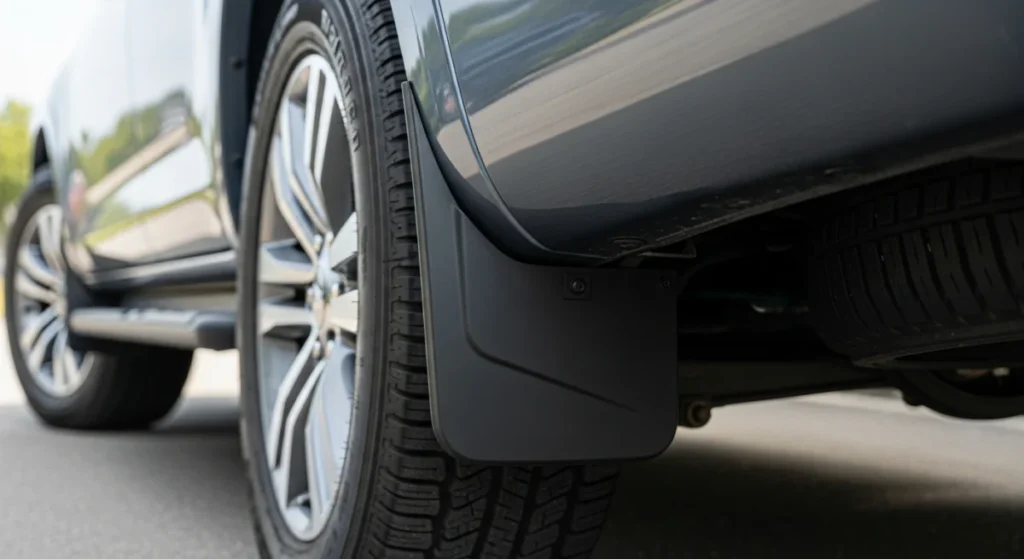
“Splash guards” usually refers to the small, rigid plastic pieces fitted by the factory. They are subtle and offer minimal protection. “Rally style” refers to the flat, wide, flexible sheets (usually Polyurethane) that universal flaps provide. Rally style offers significantly more surface area and protection but has a much bolder, more aggressive visual appearance.
5. Can I paint universal mud flaps to match my car?
It depends on the material. ABS plastic can be sanded, primed, and painted fairly easily. However, flexible rubber and polyurethane are very difficult to paint because the paint will crack and peel as soon as the flap flexes. If you want colored flaps in these materials, it is best to buy them pre-manufactured in that color.
Conclusion
Universal mud flaps represent one of the best value-for-money modifications you can make to a vehicle. They sit at the intersection of utility and aesthetics, offering a rugged look while performing the dirty work of sacrificing themselves to save your paint.
Whether you are trying to keep a pristine restoration free of rock chips, keeping a work truck compliant with the law, or giving your daily driver a rally-inspired stance, the “universal” route offers the freedom to get the fit exactly right. By choosing the right material—preferably high-grade polyurethane for cars and reinforced rubber for trucks—and taking the time to measure and install them correctly, you ensure your vehicle retains its value and structural integrity for the long haul.
Don’t wait until you see the first signs of rust on your rocker panels. Measure your wheel wells, grab a drill, and give your vehicle the armor it deserves.