Welcome to the ultimate guide on automotive exterior products! Every car enthusiast knows the importance of keeping their ride looking its best. A gleaming exterior not only boosts curb appeal but also protects your investment from the harsh elements. But with a vast array of products available, it’s easy to get lost in the details. Whether you’re a seasoned detailer or just starting to care for your car, this guide will provide you with the knowledge you need to make informed decisions and achieve a showroom-worthy shine. The automotive aftermarket is a multi-billion dollar industry, and exterior products represent a significant portion of that. Understanding the purpose, benefits, and proper use of these products can save you time, money, and potential damage to your vehicle’s finish.
The World of Automotive Exterior Protection and Enhancement
Let’s dive into the various products designed to protect, enhance, and maintain your car’s exterior. From waxes and sealants to detailing sprays and specialized cleaners, we’ll cover the essential aspects of each, ensuring you can confidently choose the right solutions for your specific needs.
Car Washes: The Foundation of Clean

What is it / How it works
Car wash soaps are specially formulated to lift dirt, grime, and contaminants from your vehicle’s paint without stripping away waxes or sealants. They utilize surfactants that reduce surface tension, allowing the soap to penetrate and emulsify dirt. Unlike household detergents, automotive car washes are pH-balanced to be gentle on your car’s finish.
Benefits and key features
- Safe on paint, chrome, glass, and plastic
- High foaming action for effective cleaning
- pH-balanced to protect your car’s finish
- Concentrated formulas for cost-effectiveness
Installation tips (if applicable)
- Always wash your car in a shaded area to prevent the soap from drying too quickly.
- Use the two-bucket method (one for rinsing, one for soap) to minimize scratching.
- Start washing from the top of the car and work your way down.
- Rinse thoroughly with clean water.
Maintenance and care
- Store car wash soap in a cool, dry place.
- Use the recommended dilution ratio for optimal performance.
- Regularly clean your wash mitts and sponges to prevent scratching.
Top buying factors
- Price per ounce of concentrate.
- pH balance.
- Foam production.
- Scent (a pleasant scent enhances the washing experience).
Waxes and Sealants: Shielding Your Shine
What is it / How it works
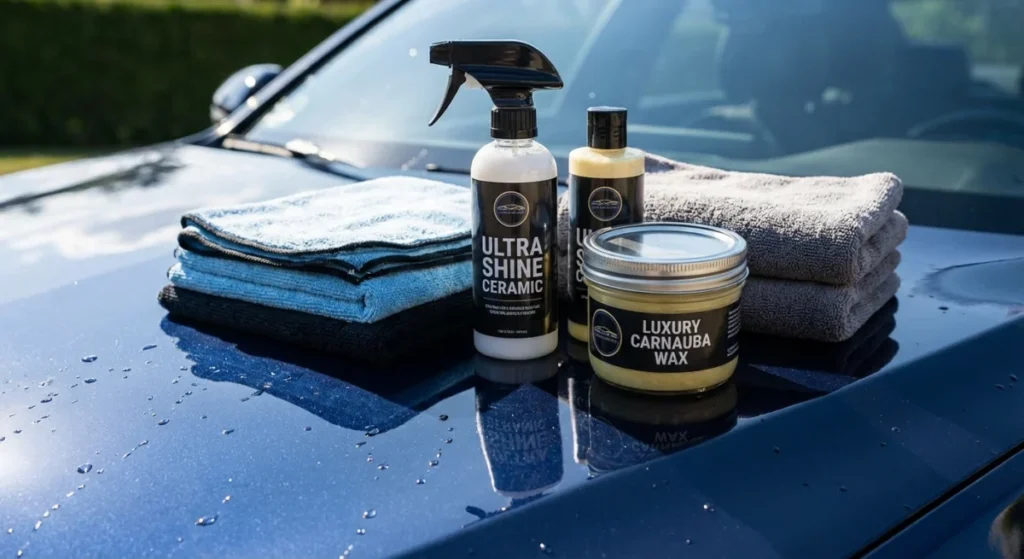
Car waxes and sealants are protective layers applied to your car’s paint to enhance its shine and protect it from the elements. Waxes, typically made from natural ingredients like carnauba, create a warm, deep gloss. Sealants, on the other hand, are synthetic polymers that offer longer-lasting protection against UV rays, oxidation, and environmental contaminants. They form a chemical bond with the paint surface.
Benefits and key features
- Enhance paint gloss and depth
- Protect against UV rays and oxidation
- Provide water beading for easy cleaning
- Offer varying levels of durability
Installation tips (if applicable)
- Ensure your car is clean and dry before applying wax or sealant.
- Apply a thin, even layer using an applicator pad.
- Allow the wax or sealant to haze according to the product instructions.
- Buff off the haze with a clean microfiber towel.
Maintenance and care
- Regularly wash your car to remove dirt and contaminants.
- Reapply wax or sealant as needed, typically every 3-6 months for waxes and 6-12 months for sealants.
- Avoid using abrasive polishes or compounds that can remove the protective layer.
Top buying factors
- Durability.
- Ease of application.
- Gloss level.
- UV protection.
Detailing Sprays: The Quick Detailer’s Secret Weapon
What is it / How it works
Detailing sprays, also known as quick detailers, are versatile products used to remove light dust, fingerprints, and water spots from your car’s paint. They often contain lubricants and gloss enhancers to leave a streak-free shine. They’re perfect for maintaining a freshly detailed look between washes.
Benefits and key features
- Quickly remove dust, fingerprints, and water spots
- Enhance gloss and shine
- Provide lubrication to prevent scratching during wiping
- Can be used on paint, glass, and chrome
Installation tips (if applicable)
- Spray the detailing spray onto a microfiber towel or directly onto the surface.
- Gently wipe the surface with the microfiber towel in a back-and-forth motion.
- Use a clean, dry microfiber towel to buff the surface to a high shine.
Maintenance and care
- Store detailing spray in a cool, dry place.
- Use clean microfiber towels to avoid scratching.
Top buying factors
- Lubricity (how well it prevents scratching).
- Gloss enhancement.
- Ease of use.
- Scent.
Wheel and Tire Care: Ground Up Grooming
What is it / How it works
Wheel cleaners are formulated to remove brake dust, road grime, and other contaminants from your wheels. Tire shines enhance the appearance of your tires, giving them a deep black and glossy look. Different wheel cleaners are designed for different types of wheels (e.g., painted, chrome, alloy). Tire shines can be water-based or solvent-based, with varying levels of durability.
Benefits and key features
- Remove stubborn brake dust and road grime
- Enhance the appearance of wheels and tires
- Protect tires from UV degradation
- Different formulations for various wheel types
Installation tips (if applicable)
- Rinse wheels and tires with water before applying wheel cleaner.
- Spray wheel cleaner onto the wheels and allow it to dwell for the recommended time.
- Agitate with a wheel brush to loosen stubborn dirt.
- Rinse thoroughly with water.
- Apply tire shine to clean, dry tires.

Maintenance and care
- Regularly clean your wheels to prevent brake dust buildup.
- Reapply tire shine as needed to maintain the desired look.
Top buying factors
- Cleaning power.
- Safe for wheel material.
- Durability of tire shine.
- Ease of application.
Headlight Restoration Kits: Seeing Clearly
What is it / How it works
Headlight restoration kits are designed to remove oxidation and yellowing from plastic headlight lenses, restoring their clarity and brightness. They typically involve sanding the lens with progressively finer grits of sandpaper, followed by polishing and sealing. The UV protection coating degrades over time, causing the hazing, so removing this layer and applying a new sealant is crucial.
Benefits and key features
- Improve headlight brightness and visibility
- Enhance the appearance of your car
- Increase safety while driving at night
- Restore clarity to faded or yellowed headlights
Installation tips (if applicable)
- Thoroughly clean the headlight lenses before starting.
- Mask off the surrounding paint to protect it from scratches.
- Follow the instructions carefully, using the correct grit sandpaper in the correct order.
- Apply a UV sealant to protect the restored lenses.
Maintenance and care
- Regularly clean your headlights to prevent future oxidation.
- Consider applying a protective film to further protect the lenses.
Top buying factors
- Completeness of the kit (includes sandpaper, polish, sealant).
- Ease of use.
- Durability of the restoration.
- UV protection offered by the sealant.
Essential Automotive Exterior Product FAQs
- Q: How often should I wash my car?
- A: Washing your car every 1-2 weeks is generally recommended, depending on driving conditions and the environment.
- Q: Is it better to wax or seal my car?
- A: It depends on your priorities. Wax provides a warm, deep gloss but requires more frequent application. Sealant offers longer-lasting protection against UV rays and environmental contaminants.
- Q: Can I use dish soap to wash my car?
- A: No! Dish soap is too harsh and can strip away waxes and sealants, damaging your car’s finish. Use only automotive-specific car wash soaps.
- Q: How do I remove swirl marks from my car’s paint?
- A: Swirl marks require polishing with a machine polisher and appropriate polishing compounds. This is best left to a professional detailer if you’re not experienced.
- Q: What is the best way to dry my car after washing it?
- A: Use a soft microfiber drying towel or a leaf blower to avoid water spots.
Conclusion
Investing in quality automotive exterior products and employing proper maintenance techniques will not only keep your car looking its best but also protect its value. Understanding the nuances of each product, from the basics of washing to the intricacies of paint protection, allows you to tailor your approach and achieve professional-level results. So, go ahead, explore the world of automotive detailing and enjoy the satisfaction of a meticulously maintained vehicle.