Car Organizers Installation: A Comprehensive Guide
Are you tired of a cluttered car interior? Do stray items roll around under your seats, creating distractions and hazards while you’re driving? You’re not alone! Studies show that a disorganized car can significantly increase stress levels and potentially contribute to accidents. Fortunately, a wide range of car organizers offer a simple, effective solution. This comprehensive guide will provide you with expert insights into different types of car organizers, their installation methods, benefits, and key features, helping you reclaim your car’s interior and drive with confidence.
Understanding Car Organizers
What is a Car Organizer and How Does it Work?
A car organizer is a storage solution designed to maximize space and improve organization within a vehicle. They come in various shapes, sizes, and materials, each designed for a specific purpose. They work by creating designated storage areas for items that would otherwise be loose or scattered around the car.
Benefits and Key Features
Enhanced Safety: Prevents loose objects from rolling around and distracting the driver. Improved Organization: Creates designated spaces for various items, making them easy to find. Maximized Space: Utilizes often-unused areas like the trunk, backseat, or console. Cleanliness: Reduces clutter and helps keep the car interior tidy. Increased Comfort: Contributes to a more relaxed and enjoyable driving experience. Time-Saving: Eliminates the need to search for misplaced items.
Key features to look for include:
- Durable Materials: Look for organizers made from sturdy fabrics like Oxford cloth, polyester, or leather.
- Adjustable Straps & Buckles: Ensure a secure fit in your vehicle.
- Multiple Compartments: Different sized pockets and compartments for various items.
- Water Resistance: Especially important for organizers in areas prone to spills.
- Foldable Design: For easy storage when not in use.
- Insulated Sections: For keeping food and drinks cool or warm.
Types of Car Organizers and Their Installation Methods
Trunk Organizers
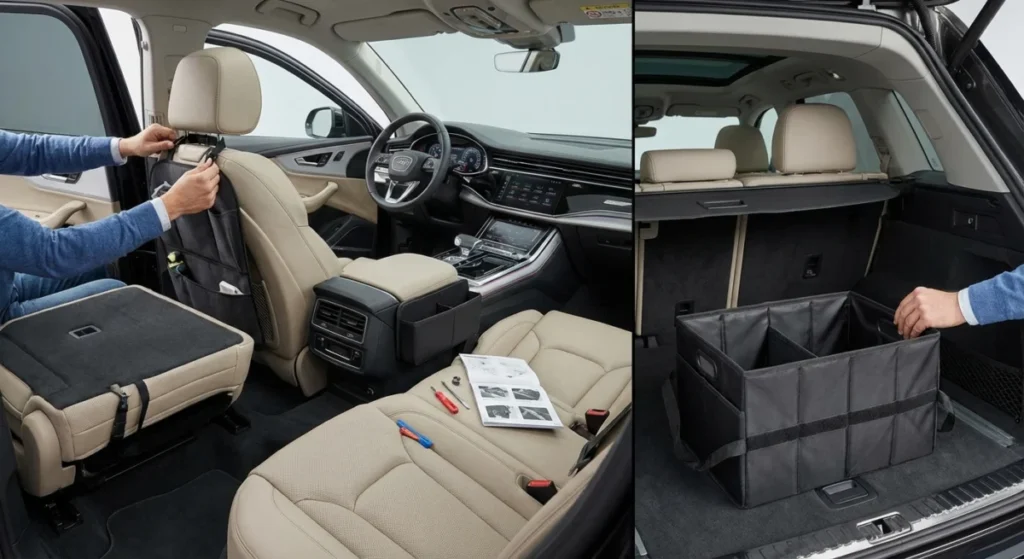
Trunk organizers are designed to keep the trunk space neat and tidy. They come in various styles, from collapsible bins to multi-compartment organizers with dividers.
Installation Tips:
- Most trunk organizers are designed to unfold and sit securely in the trunk.
- Many include adjustable straps with buckles that can be attached to the car’s headrests or cargo hooks.
- Some have non-slip bottoms to prevent them from sliding around.
- For organizers with straps, ensure they are securely fastened to prevent shifting during driving.
- Consider using Velcro strips to further secure the organizer to the trunk floor if needed.
Maintenance and Care:
- Regularly wipe down the organizer with a damp cloth to remove dirt and spills.
- For tougher stains, use a mild detergent and a soft brush.
- Air dry the organizer completely before storing it.
Top Buying Factors:
- Size and Capacity: Choose an organizer that fits your trunk size and storage needs.
- Durability: Look for durable materials and reinforced stitching.
- Foldable Design: For easy storage when not in use.
- Compartments: Choose an organizer with the right number and size of compartments for your items.
- Water Resistance: Especially important if you frequently transport groceries or liquids.
Backseat Organizers
Backseat organizers attach to the back of the front seats, providing storage for items like books, tablets, water bottles, and snacks. They are a great way to keep kids entertained and organized on long trips.
Installation Tips:
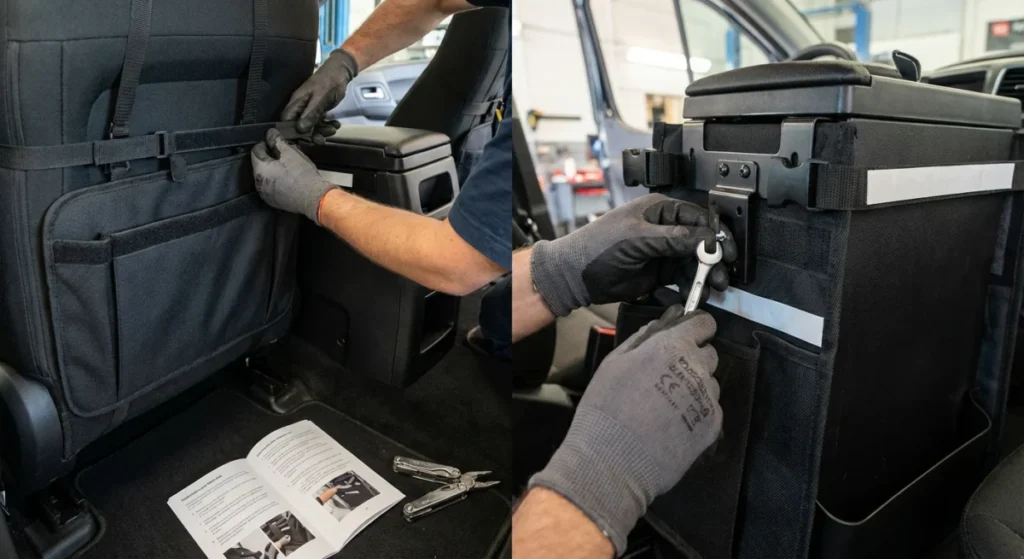
- Most backseat organizers attach to the headrests of the front seats using adjustable straps.
- Some also have bottom straps that attach around the seat back for added stability.
- Ensure the straps are securely fastened and tightened to prevent the organizer from sagging.
- Check for compatibility with your seat type, especially if you have bucket seats or integrated headrests.
- Some models include touchscreen viewer pockets, which should be placed carefully to not obstruct the driver’s rear view.
Maintenance and Care:
- Wipe down the organizer regularly with a damp cloth.
- Remove and wash the organizer according to the manufacturer’s instructions.
- Inspect the straps regularly for wear and tear.
Top Buying Factors:
- Number and Size of Pockets: Choose an organizer with the right number and size of pockets for your needs.
- Tablet Holder: If you plan to use the organizer for entertainment, look for a model with a secure tablet holder.
- Durability: Look for durable materials and reinforced stitching.
- Ease of Installation: Choose an organizer that is easy to install and remove.
- Water Resistance: Protects against spills and messes.
Console Organizers
Console organizers are designed to fit inside the center console of your car, providing a more organized space for small items like phones, keys, and sunglasses.
Installation Tips:
- Console organizers typically drop into the existing console space.
- Some may require minor adjustments or trimming for a perfect fit.
- Check the dimensions of your console before purchasing to ensure compatibility.
- Consider purchasing a custom-fit console organizer for a seamless look and fit.
Maintenance and Care:
- Wipe down the organizer regularly with a damp cloth.
- Remove and clean any spills or debris promptly.
Top Buying Factors:
- Fit: Choose an organizer that is designed specifically for your car model for the best fit.
- Compartments: Look for compartments that are sized appropriately for your items.
- Material: Choose a durable and easy-to-clean material.
- Accessibility: Ensure that the organizer does not obstruct access to essential controls or features.
Seat Gap Organizers
Seat gap organizers are designed to fill the gap between the seat and the center console, preventing items from falling into the abyss. They also provide additional storage space for small items.
Installation Tips:
- Seat gap organizers typically slide into the gap between the seat and the console.
- Some models have adjustable wedges to ensure a snug fit.
- Ensure that the organizer does not interfere with the seatbelt buckle.
Maintenance and Care:
- Wipe down the organizer regularly with a damp cloth.
- Remove and clean any debris that may accumulate in the gap.
Top Buying Factors:
- Fit: Choose an organizer that is sized appropriately for the gap in your car.
- Material: Look for a durable and easy-to-clean material.
- Storage Capacity: Consider the amount of storage space you need.
- Aesthetics: Choose an organizer that complements your car’s interior.
Visor Organizers
Visor organizers attach to the sun visor and provide storage for items like sunglasses, registration, and insurance cards.
Installation Tips:
- Visor organizers typically attach to the visor using elastic straps or clips.
- Ensure that the organizer is securely attached and does not obstruct your view.
Maintenance and Care:
- Wipe down the organizer regularly with a damp cloth.
Top Buying Factors:
- Number of Pockets: Choose an organizer with the right number of pockets for your needs.
- Security: Ensure that the organizer securely holds your items.
- Aesthetics: Choose an organizer that complements your car’s interior.
Essential FAQ Section
Q1: How do I choose the right car organizer for my needs?
Consider the type of items you need to store, the available space in your car, and your budget. Evaluate the dimensions of the organizer and compare them to the space you intend to use it in.
Q2: Can car organizers damage my car’s interior?
Potentially, if improperly installed or made from abrasive materials. Make sure to use organizers with smooth surfaces and secure straps that won’t scratch or damage your seats or trim. Test the straps on an inconspicuous place first.
Q3: Are car organizers universal or do I need a specific one for my car model?
Some are universal, while others are designed for specific car models. Check the product description for compatibility information. For console organizers and some seat gap organizers, a model-specific fit is often preferable.
Q4: How often should I clean my car organizer?
Clean your car organizer as needed, depending on how frequently you use it and how messy it gets. A weekly wipe-down is generally a good practice.
Q5: What’s the best way to secure a heavy trunk organizer to prevent it from sliding?
Use a combination of non-slip mats, adjustable straps attached to cargo hooks, and potentially Velcro strips to the trunk floor. Distribute the weight evenly within the organizer.
Conclusion
Investing in car organizers is a simple yet effective way to transform your driving experience. By choosing the right organizers and installing them correctly, you can create a cleaner, safer, and more enjoyable environment in your vehicle. Remember to consider your individual needs, the type of items you need to store, and the available space in your car. With a little planning and effort, you can reclaim your car’s interior and enjoy the benefits of a well-organized vehicle.